What is a “Pinched Nerve”?

A “pinched nerve” refers to a condition in which a nerve is compressed by surrounding tissue, such as ligament, cartilage, tendon or bone. The term “pinched nerve” is not a standard medical expression, but it’s an intuitive expression that almost anyone will understand.
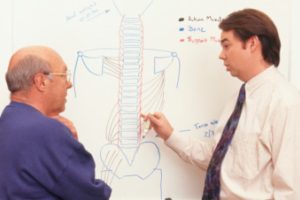
Nerves radiate from your brain, down your spine and to all other parts of the body. Signals are sent from and to the brain along the nerves, and if a nerve is compressed (“pinched”), it will interfere with proper signal transmission. Usually, this will manifest as pain, not only at the site of compression, but sometimes radiating from that point to surrounding parts of the body. Misalignment of the spine can result in pinched nerves that can give you back pain and even a deadening ache or sensitivity along your arms (cervical radiculopathy) or legs (sciatica).
Any pain of this sort is a warning signal that there is a problem that should be treated right away. Left untreated, pinched nerves can lead to a loss of the protective barrier around the nerves which could generate fluid buildup. And this fluid would create swelling, more pressure, more pain, and possibly scarring. When nerves have been scarred, they may no longer function properly.
Pain isn’t the only indication of a pinched nerve. Sometimes a compressed nerve will generate numbness or tingling, a burning or “pins and needles” sensation, or even weakness during certain activities.
Pinched nerves can occur more often when the following risk factors are involved:
- Overuse—Repetitive actions such as movements during work or while involved in a hobby or sport.
- Posture—Bad posture creates more pressure on the spine and the nerves traveling through it.
- Gender—Women’s carpal tunnels are smaller and are at greater risk for carpal tunnel syndrome.
- Rheumatoid arthritis—Inflammation of any kind can compress nerves, especially at the joints.
- Obesity—Increased body weight can increase pressure on nerves throughout the body.
- Bone spurs—Bone thickening (from conditions such as osteoarthritis) or trauma can lead to bone spurs that stiffen the spine and narrow the space through which the nerves pass.
Mainstream medicine frequently recommends drugs, including NSAIDs, oral corticosteroids, narcotics (for emergency, short-term pain relief) and steroid injections to treat the symptoms of a pinched nerve. The Mayo Clinic suggests that patients can sometimes recover within a few days or weeks from pinched nerves with rest and additional “conservative treatments.” Other mainstream medical treatments may include physical therapy, a splint to immobilize a limb to give it a bit of rest, or surgery.
A chiropractor specializes in nerve health and non-invasive methods of reducing pain and restoring proper function, including spinal adjustments and other treatments that take the pressure off the nerves without the need for drugs or surgery. Sometimes a single adjustment can lead to immediate relief. In other cases, repeat visits may be required for full recovery. If you or someone you care about is suffering from a pinched nerve, you should know that there are alternatives to drugs and surgery and that chiropractic care has proven effective in treating the source of the problem so it is less likely to recur in the future.
If you would like to be seen by Dr. Oblander for treatment of a pinched nerve or any other ailment, please call our office at 406-652-3553 to schedule an appointment.


 We are sharing an article today that was first run in the Billings Gazette in 2014. We think it has some good information and we have added a few tips of our own at the conclusion of the article:
 Mark Teixeira has been the New York Yankees’ first baseman since 2009. At 32 years old, Teixeira’s physical condition is very important to him, which is why he uses the regular services of his chiropractor, Gil Chimes, who is one of the Yankees’ team chiropractors and who is the clinical director of a thriving practice, Greenwich Sports Medicine, in Greenwich, CT. Teixeira visits Chimes once a week for a two-hour session.
 Pain serves an important function in our lives. When you suffer an acute injury, pain warns you to stop the activity that is causing the injury and tells you to take care of the affected body part.

 What do you think about when you hear the word “massage”? If you’re like many people, you associate massage with a day of pampering at an exclusive resort spa in the mountains or at the beach. But if that’s the first picture that comes to mind, you might be missing something very, very important. That something is the therapeutic value of massage—the ways that massage can actually improve your health and well-being.
 It’s no secret that some jobs are just more physically demanding and more dangerous than others. Some of the most challenging ones are obvious—combat roles in the military, fire and rescue, heavy construction and deep sea fishing are just a few that come to mind. However, when it comes to non-fatal musculoskeletal injuries, the statistics tell a very different story about occupational health and safety and about who’s most likely to get hurt on the job.