Top 5 Workouts for Increasing Range of Motion in Your Back
Back pain can have a truly negative effect on your professional life as well as your lifestyle. It can be difficult to get out of bed and make the morning commute. Then—depending on what you do for a living—pain and limited mobility can take a huge toll on your productivity while you’re at work. And when you return home, you may also find that you’re not able to do the active things you enjoy with your family and friends. It’s no wonder that chronic back pain can lead to depression.
If you or someone you care about is suffering from back pain, the good news is that there are things that can be done about it. First of all, it’s essential that you get proper medical attention so that your condition can be diagnosed and an appropriate treatment plan can be put in place. Dr. Oblander and other chiropractic physicians are experts at diagnosing and treating musculoskeletal problems as well as problems with the nervous system. Depending on your specific situation, he or she may recommend a variety of in-office treatment options to help relieve pain and restore function. Your doctor may also prescribe a series of at-home exercises or stretches designed to increase the range of motion in your back.
Range of motion is the movement of a joint from full flexion (flexed) to full extension. Certain back problems, ranging from spinal misalignment and muscle imbalances to sprains, strains and pinched nerves (just to name a few), can significantly limit how much you can move. Here are workouts that can help improve your back’s mobility. Remember—use these only after consulting with your chiropractor!
- Aquatic exercise. Perfect as a low-impact exercise that’s gentle on your joints and muscles, swimming and other water exercises are a great way to ease your back into working out. It is especially beneficial when the water is warm—say, between 83 and 88 degrees Fahrenheit. If you don’t have access to a heated pool, check out the gyms in your town. Many of the big-name gyms feature not only heated swimming pools, but also hot tubs and steam rooms, which can help relax your joints and muscles, giving them a much-needed break.
- As simple as it sounds, walking is a great way to get simple, accessible exercise. It also strengthens your heart, lungs and overall endurance. Make sure you wear appropriate footwear and take it easy—there’s no need to start out walking miles a day unless you’re up to it. Again, ask your chiropractor for his or her advice.
- Strength and resistance training. According to Harvard Medical School, not only is resistance training good for increasing range of motion, but it also strengthens your heart, lungs, and overall endurance.
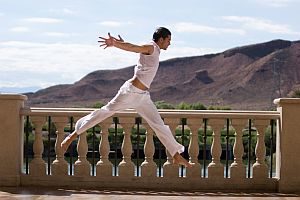
- Tai chi. An ancient form of Chinese exercise, tai chi is practiced through a series of slow moving poses that can be very effective at extending your range of motion. In addition to increasing flexibility, it is also purported to strengthen muscles, and develop balance and coordination.
- Like tai chi, yoga is another very old form of exercise. Developed in India over a great many years, yoga eases stiffness in muscles and encourages greater range of motion. Just be careful not to overdo it—it could be detrimental to your condition.
If you need help with addressing your back pain, be sure to give our office a call at 406-652-3553 to schedule an appointment with Dr. Oblander!

 The Mayo Clinic describes second impact syndrome (SIS) as a complication arising from a concussion. It occurs when someone experiences a second concussion prior to fully recovering from the initial one. With SIS, “typically fatal brain swelling” occurs. R.C. Schneider first described this condition in 1973, but it wasn’t until 1984 that someone gave it the name, “second impact syndrome”. The condition is rare enough that only 21 cases had been cited in the literature up until 2003.
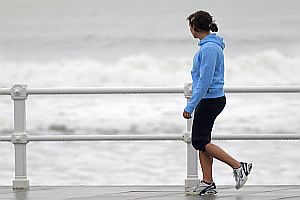 Why “low impact” cardio exercises? Imagine reaching your “golden years” with a buff beach body only to be told that you can’t jog or run anymore because your knee cartilage has been worn thin or you have damaged vertebrae. The last thing you want to do is ruin your body while trying to stay in shape. Here we present some good low impact cardio exercises that can help you maintain a healthy cardiovascular system without causing damage to your musculoskeletal system.
 Did you know that fully a quarter of your body’s bones are in your feet? These complex marvels of engineering by Mother Nature provide your body with a firm foundation, and are constantly in demand to help move the body from one place to another. With 19 muscles and 26 bones each, your feet are important for the balance and health of the entire body.
 Manual therapies have been used to treat musculoskeletal disorders for thousands of years. Practitioners around the world—in countries with many different cultural influences and diverse medical traditions—have used their hands to manipulate various parts of the body to stimulate healing. “Manual” literally means “by hand.” Thus, manual therapies consist of healing techniques that use the hands. There are more than two dozen techniques used worldwide. Among the most commonly known are acupressure, chiropractic, massage therapy, physiotherapy, reflexology, Rolfing and shiatsu.
 Perhaps the most frequent injury involving automobiles comes from closing the door. Nearly 150,000 times a year, someone is injured in this fashion, and that’s with the car parked or stationary. This includes doors closing on fingers. Another 10,000 are injured by using a jack and 74,000 have been injured by a car or car part falling on them.