How Chiropractic Care Has Helped Me: Introducing Mark Teixeira
 Mark Teixeira has been the New York Yankees’ first baseman since 2009. At 32 years old, Teixeira’s physical condition is very important to him, which is why he uses the regular services of his chiropractor, Gil Chimes, who is one of the Yankees’ team chiropractors and who is the clinical director of a thriving practice, Greenwich Sports Medicine, in Greenwich, CT. Teixeira visits Chimes once a week for a two-hour session.
Teixeira says, “Some people would call it anal, but I like things done a certain way.” Like any high-performance instrument, such as a Lamborghini or a Stradivarius, Teixeira believes the body of an athlete needs top care. He says, “You need to continue to tune it to make sure it’s perfect for every show or game or however you want to put it.”
And Teixeira is adamant about treating his body holistically by eating right (he prefers fish, vegetables, raw juices and smoothies to steak and potatoes) and taking advantage of drug-free therapies. This includes therapies such as chiropractic adjustments, acupuncture, Active Release Technique (ART) and the Graston Technique. “When you think about all the anti-inflammatory drugs that are pumped into athletes’ bodies, it’s really sad,” Teixeira says.
Muscular imbalances and repetitive stress can create scar tissue in the muscles and fascia that support them, which can entrap nerves and reduce range of motion. Top athletes such as baseball players are particularly prone to this type of problem, and it can impact their performance. Chimes uses ART regularly on Teixeira. He locates the area of contracted muscle and presses down firmly at precise spots with his thumbs. This makes the knotted muscle or scar tissue relax and release any trapped nerves, relieving pain and restoring range of motion.
Similar to ART, Chimes uses the Graston technique on Teixeira to further release tension and repair damage to the soft tissue. For this, a small metal bar is used to break down the scar tissue that has built up over time.
Teixeira says of Chimes, “If I had my way Gil would be with me every single day of the year. He didn’t travel with the team last year, but if he had, I wouldn’t have had that calf injury, or at least it wouldn’t have been as bad.”
Teixeira has spent the early part of the 2013 season recovering from a tendon injury in his wrist that he acquired during spring training, but his rehabilitation has been going well and he expects to be back in the game any day now.
 Retired Brigadier General Becky Halstead is no stranger to pain. She spent her entire adult life in the military, and was the first female graduate from West Point to become a general officer. She has seen battle all over the world, including in Iraq. But she has also fought her own personal battle—with fibromyalgia.

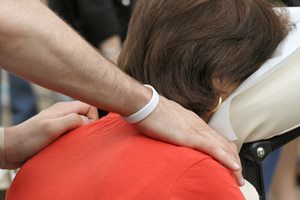 What do you think about when you hear the word “massage”? If you’re like many people, you associate massage with a day of pampering at an exclusive resort spa in the mountains or at the beach. But if that’s the first picture that comes to mind, you might be missing something very, very important. That something is the therapeutic value of massage—the ways that massage can actually improve your health and well-being.
 It’s no secret that some jobs are just more physically demanding and more dangerous than others. Some of the most challenging ones are obvious—combat roles in the military, fire and rescue, heavy construction and deep sea fishing are just a few that come to mind. However, when it comes to non-fatal musculoskeletal injuries, the statistics tell a very different story about occupational health and safety and about who’s most likely to get hurt on the job.