What’s Inside the Average American Medicine Cabinet? And What Should Be.
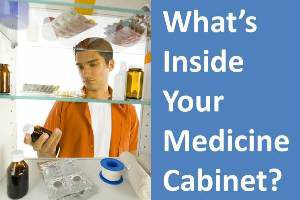 Take a look inside the average American’s medicine cabinet and you are likely to find out-of-date prescription medications, half-used bottles of lotion, some painkillers and a box of Band-Aids. Some of these are useful, and some should have been disposed of long ago. Along with the annual maintenance that you perform on your smoke detector, your medicine cabinet should have a thorough evaluation and clean-out once a year as well.
Many minor health issues can be treated at home, saving you and your doctor unnecessary time and expense. The key is to be sure that what you have on hand is effective for treating your problem. Medicines lose their effectiveness over time, so any medicine that is beyond its expiration date should be discarded. Do not flush medicines down the toilet or dispose of them in the trash, as they can make their way into the water system, which is becoming an increasing problem for water treatment facilities. Instead, drop off expired medicines at your local pharmacy, where they will dispose of them safely.
Experts advise that the following items should be staples in any medicine cabinet:
Painkillers – It is useful to have a few different types on hand, to treat different types of pain. Aspirin is best for general pain relief and to reduce fever, acetaminophen is easier on the stomach and good for children (who should not take aspirin due to the danger of Reye’s syndrome), and ibuprofen is an anti-inflammatory useful for treating muscle cramps, sprains and arthritis pain. None of these should be taken in large amounts, as they can harm the liver.
Antihistamine/Decongestant – For itching, sneezing and congestion due to colds and allergies.
Cold and flu remedies – To reduce the aches, pain and fever of a cold or flu.
Cough medicine – Can be either a suppressant (to reduce coughing) or an expectorant (to loosen phlegm and make coughing more productive). However, FDA pediatricians warn that cough medicine should not be given to children under 6 years of age because of the potential for severe harmful side effects. Studies have found that honey is actually more effective than most cough medicines in reducing coughing. Honey, however, should not be given to children under one year of age because of the risk of infant botulism.
Gastrointestinal remedies – To treat indigestion, heartburn, diarrhea and nausea. Pepto-Bismol and some type of antacid are useful items to have on hand.
First aid kit – To treat minor injuries, a basic first aid kit should contain Band-Aids, sterile dressing, medical tape, tweezers, eyewash, antiseptic cream, an ace bandage and a thermometer.
Your bathroom is not the best place to keep medications, as the heat and moisture from the shower can speed their deterioration. A better choice is to keep them in a cool, dark, dry place such as in a linen closet. By keeping your medicine cabinet well-stocked and up-to-date, you may be able to save yourself a trip to the doctor.
Remember, that in addition to basic medical supplies, one of the best ways to stay healthy is to get a regular adjustment from Dr. Oblander!

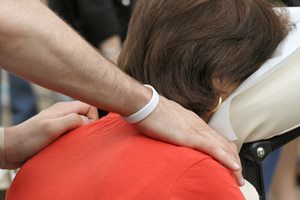 What do you think about when you hear the word “massage”? If you’re like many people, you associate massage with a day of pampering at an exclusive resort spa in the mountains or at the beach. But if that’s the first picture that comes to mind, you might be missing something very, very important. That something is the therapeutic value of massage—the ways that massage can actually improve your health and well-being.
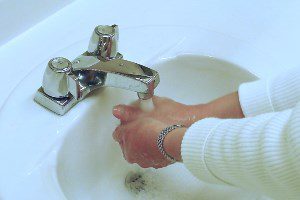 As summer turns to fall, lots of people (children and adults alike) will be spending more time inside and in closer proximity to one-another. Washing your hands is something simple we can all do to keep our schools, workplaces and homes just a little bit healthier. In fact, it’s actually been identified by the US Centers for Disease Control and Prevention (CDC) as the single most effective way to prevent the spread of communicable diseases.
 It’s no secret that some jobs are just more physically demanding and more dangerous than others. Some of the most challenging ones are obvious—combat roles in the military, fire and rescue, heavy construction and deep sea fishing are just a few that come to mind. However, when it comes to non-fatal musculoskeletal injuries, the statistics tell a very different story about occupational health and safety and about who’s most likely to get hurt on the job.